
The Ultimate Guide to Japan Motorcycle Tours 2026: Riding the Japanese Alps
If you’ve spent your life chasing the perfect line through the Pyrenees or the Rockies, you know the feeling: that moment when the bike, the road, and your lizard brain sync up at 60 degrees of lean. You don’t ride to “see things”; you ride to feel the mechanical sympathy of a well-timed downshift and the lateral G-forces of a perfectly executed apex.
But let’s be real. Most “international motorcycle tours” are designed for the lowest common denominator. They keep you on the highways, they park you in tourist traps, and they treat your Yamaha Tracer 9GT+ like a mobility scooter.
At ADVpaths, we built the Japan Craft, Culture & Riding Journey for the rider who actually likes to ride. This isn’t a sightseeing holiday; it is a technical expedition into the heart of a 70% mountainous archipelago designed by the gods for sport-touring.
1. The Asphalt: Japan’s Secret Engineering Weapon
You haven’t truly lived until you’ve experienced Japanese mountain asphalt. It’s not just “road”; it’s a high-friction, impeccably maintained surface engineered with a level of precision that makes the Stelvio Pass look like a gravel driveway.
The Physics of the Grip
In the Japanese Alps, the aggregate in the bitumen is chosen for its drainage properties during the “Tsuyu” (rainy season). For the rider, this means predictability. When you’re trail-braking into a blind hair-pin on the outskirts of Takayama, you aren’t hunting for potholes or mid-corner gravel. You are trusting a consistent contact patch.
The “Venus Line” Masterclass
On Days 4 and 5, we hit the Venus Line and the Nagano Highlands. These aren’t just “scenic routes.” They are technical, rhythmic masterpieces of civil engineering.
The Sweepers: We’re talking about constant-radius sweepers that let you settle into a deep, stable lean for 5–10 seconds at a time.
The Switchbacks: Tight, uphill hairpins that demand proper rear-brake dragging and vision techniques. If you aren’t looking 50 meters ahead at the exit, the mountain will remind you quickly.
2. The Fleet: Precision, Not Compromise
We know you have a “real” bike at home. You likely have a dialed-in suspension and a favorite set of tires. That’s why our 2026 fleet isn’t an afterthought. We choose bikes that complement the Japanese terrain — which is tight, twisty, and demands agility over raw horsepower.
The Weapons of Choice:
The Neo-Classic: Kawasaki Z900RS. This is for the purist. Want to feel the inline-four scream through a tunnel in the Japanese Alps? The Z900RS offers that raw, mechanical connection. Its upright geometry is surprisingly capable when you need to flick it through the “S-curves” of the Hokuriku region.
The Tech-Tourer: Yamaha Tracer 9GT+. Equipped with semi-active suspension and adaptive cruise control, this is the ultimate weapon for 200km+ days. The CP3 engine has the torque to pull you out of tight mountain corners without dancing on the gear lever.
The Line-Hunter: Honda NC750X DCT. Don’t scoff at the DCT. In the most technical sections of the Nagano passes, where you’re shifting 40 times in three minutes, the DCT allows you to focus 100% on your body position and your apex. It’s a “cheat code” for mountain riding.
3. The “Takumi” Connection: Mechanical Empathy
As experienced riders, we appreciate craftsmanship — the click of a precise gearbox, the feel of a forged frame. This tour bridges that mechanical appreciation with Japan’s living history.
When we stop in Seki, we aren’t just looking at knives in a gift shop. We are visiting the workshops of the Takumi — masters of steel whose ancestors forged the katanas of the Samurai. The dedication they show to a blade’s edge is the same dedication we bring to maintaining our fleet.
Why “Culture” Matters to a Rider
Riding in Japan is a lesson in Zen and the Art of Motorcycle Maintenance. The discipline of the local drivers and the cleanliness of the rest stops (Michi-no-Eki) create a low-stress environment. This “mental bandwidth” is then free to be spent on the road itself.
4. Decoding the Logistics: The ADVpaths Difference
We get it. You hate being stuck in a 20-bike “follow-the-leader” convoy. It’s boring, it’s slow, and it’s dangerous.
Small Groups, High Velocity
Our groups are capped to ensure we can move through the mountains as a cohesive unit. Our guides don’t just “lead” — they act as your local fixers.
ETC & Tolls: Japan’s toll system is a nightmare for foreigners. We handle all the electronic toll collection (ETC) so you never have to faff with gloves and coins at a booth.
The Support Van: Your luggage travels separately. This is crucial. A bike handles differently when it’s not lugging 30kg of panniers. We want you on a naked, light machine so you can actually feel the suspension working.
5. Route Overview: Your 12-Day Itinerary at a Glance
Every day on the ADVpaths Japan Craft, Culture & Riding Journey is engineered for maximum road time with minimum logistics friction. Here is the arc of the trip.
Days 1–2 (Tokyo): Airport transfer, bike fit, gear check, and an evening in Shibuya. Day 2 is a calibration loop through the Kanagawa hills — 120km to adjust to left-hand traffic and get acquainted with your machine.
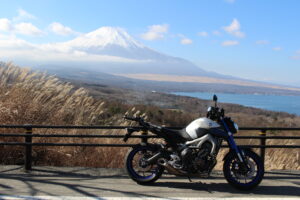
Day 3 (Hakone / Izu): The Hakone Skyline and Izu Skyline back-to-back. Views of Fuji from 1,000m elevation. First night in a traditional Ryokan with private Onsen.
Days 4–5 (Venus Line / Nagano Highlands): The technical centrepiece of the tour. 300km of constant-radius sweepers and high-alpine passes through the Northern Alps. Overnight in Matsumoto, home of Japan’s finest standing castle.
Day 6 (Matsumoto to Takayama): The Japanese Alps crossing via the Hida Kanko Road. You gain 1,600m of elevation before a spectacular descent into the Hida valley and one of Japan’s best-preserved Edo-period towns.
Days 7–8 (Takayama): A strategic rest day. Morning visit to the Seki blade district workshop. Afternoon sake brewery tour in the old town. Your legs and your head will thank you for the break before the second half.
Day 9 (Takayama to Kyoto): The most scenic single-day ride — the Wakasa Bay coastal road via Sea of Japan cliff roads before cutting inland to the ancient capital.
Day 10 (Kyoto): Guided cultural day. Fushimi Inari at dawn (before the crowds), Arashiyama bamboo grove at midday, and a traditional kaiseki dinner to close.
Days 11–12 (Ise Peninsula / Tokyo): The coastal finale along the Ise-Shima Skyline, then a fast run up the Tomei Expressway back to Tokyo for bike drop-off and departure.
Total riding: approximately 1,800–2,100km depending on optional diversions. Average daily saddle time: 4–5 hours. Average daily distance: 160–220km — fast enough to feel like riding, slow enough to remember what you saw.
6. Technical Terrain Analysis: What to Expect
To truly understand Japan, you have to understand the physics of the Alps.
Elevation Changes
You will be climbing from sea level to over 2,000 metres in a single afternoon. This means temperature drops of 10–15°C and potential cloud cover on the passes. Your gear needs to be versatile. We recommend a high-end 3-layer Gore-Tex system.
Vision and Shadows
The forests in the Alps are dense. In the afternoon, the “strobe light” effect of sun through the trees can be disorienting. A high-quality helmet with a drop-down sun visor or a photochromic shield is a safety requirement, not a luxury.
The Coastal Transition
When we move from the mountains to Nishi Izu, the road changes. The asphalt becomes salt-aired and wind-swept. The curves become longer, faster “sweepers” overlooking the Pacific. It requires a shift in riding style — moving from the “point-and-shoot” mountain style to a more fluid, high-speed flow.
7. ATGATT in Japan: Professional Standards
Japan has a very high standard of riding gear. You will see local riders in full Dainese or Alpinestars leathers even on a Sunday coffee run. At ADVpaths, we mandate ATGATT (All The Gear, All The Time).
The Kit List for 2026:
Armor: Level 2 CE protection is the minimum. Back protectors are non-negotiable on technical mountain passes.
Boots: Full-height touring boots. The mountain roads have steep inclines; you need the ankle support when stopping on uneven surfaces.
Connectivity: We use mesh communication systems. Whether it’s a warning about a patch of damp road in a tunnel or a quick “check the view,” staying connected enhances both safety and the experience.
8. Visa & Entry Requirements for Japan
Good news: Japan has one of the most straightforward entry regimes in Asia for Western riders. Here is what you need to sort before you book flights.
Visa waiver: Citizens of most Western countries (UK, EU, USA, Canada, Australia, New Zealand) receive 90-day visa-free entry on arrival. No pre-application required. Check the Japan Immigration Services Agency website for your specific nationality if in doubt.
International Driving Permit (IDP): As covered in the FAQ below, the 1949 Geneva Convention IDP is mandatory for riding. Obtain this through your national automobile association (AA, AAA, ADAC, RAC, etc.) before departure — it cannot be issued abroad.
Motorcycle licence class: Your IDP must carry a motorcycle endorsement. A car-only IDP will not allow you to legally ride. Ensure your home licence clearly shows the motorcycle entitlement before applying for the IDP.
Insurance: ADVpaths provides comprehensive third-party and damage cover on all fleet bikes. Personal travel insurance with medical repatriation is strongly recommended — Japan’s private healthcare costs are significant without cover, and mountain riding carries inherent risk.
ETC Transponder: Japan’s electronic toll collection system requires a transponder fitted to the bike. ADVpaths pre-loads all bikes with ETC units for the tour duration. You will never need to fumble with coins in a gloved hand at a toll plaza.
9. The Rider’s Packing List: What to Bring, What to Leave
The support van handles your main luggage between hotels. On the bike you carry a tail bag or a 20-litre tank bag maximum. Pack accordingly — a light bike is a fast bike.
Riding Gear (Non-Negotiable)
- Full-face or modular helmet with drop-down sun visor or photochromic shield — the alpine strobe-light effect makes a fixed dark visor dangerous
- 3-layer Gore-Tex touring jacket with removable thermal liner
- CE Level 2 armoured trousers with thermal liner for the high passes
- Full-height touring boots with ankle protection and oil-resistant sole
- Two pairs of gloves: summer mesh for Tokyo and coastal days, windproof waterproof for the Nagano highlands
- Balaclava or merino neck gaiter — temperatures drop to 5–8°C above 2,000m even in May and October
Documents
- Passport (valid at least 6 months beyond your return date)
- 1949 Geneva Convention IDP with motorcycle endorsement — the single most important item you will pack
- Travel insurance certificate with medical evacuation and repatriation cover
- Emergency contact card (ADVpaths provides a laminated card in Japanese for use in roadside emergencies)
Electronics
- Phone with offline Google Maps Japan downloaded before departure — mobile data SIMs are available at all major airports
- RAM mount or equivalent phone/GPS cradle — handlebar bar-end threads are M10 on all fleet bikes
- 20,000mAh powerbank — heated liner and phone navigation draw significant power on long days
- Mesh intercom headset (ADVpaths uses Sena 50S as standard; bring your own compatible unit or hire from us)
- Action camera with vibration-dampened mount if you want footage — Japanese tunnel acoustics are extraordinary
Leave at Home
- Heavy panniers and top boxes — the van carries everything above a 20-litre day bag
- Open-face helmets — tunnels, mountain weather, and ATGATT policy rule these out
- Power adapters for European or UK plugs — Japan uses Type A (identical to USA/Canada), flat two-pin
10. Best Seasons to Ride Japan: A Full Breakdown
We run our tours during the two “Goldilocks” windows of the Japanese year, but it helps to understand why the other two seasons are avoided.
Spring — May (Our Peak Season)
May is arguably the finest month to ride Japan. The famous “Yuki no Kabekan” snow walls — some reaching 20 metres high — are still visible on the Tateyama Kurobe Alpine Route. The air temperature sits at 8–15°C in the mountains, meaning the engine breathes dense, cool air and your CE armour doesn’t feel like a sauna. Cherry blossom season peaks in April at lower elevations; at altitude you often catch the tail end in early May. The roads are quiet: Japanese school holidays haven’t started, and the summer coach tours haven’t arrived.
Summer — June to August (Avoid)
June and July bring “Tsuyu” — the rainy season. While the asphalt performs well in the wet (see Section 1), visibility on the high passes can drop to 10 metres in cloud. August is hot and humid at lower elevations (35°C+ in Tokyo), and the roads fill with domestic tourists. The mountains are rideable but the experience suffers. We do not schedule tours in this window.
Autumn — October (Our Second Season)
This is the season of Koyo — autumn foliage. The Japanese Alps turn fire-red, burnt orange, and deep gold from mid-October through early November. The humidity of summer has vanished. Grip levels on the mountain asphalt are at their annual peak. Temperature in the Nagano highlands runs 10–18°C — perfect for the thermal liner you’ve brought. This is arguably the most visually spectacular time to be on a motorcycle anywhere in the Northern Hemisphere.
Winter — November to March (Not Recommended)
The high passes above 1,500m close from November through late April. Road surfaces in the valleys are treated with calcium chloride, which accelerates brake rotor and caliper corrosion. Unless you are an experienced winter rider with the right equipment, we strongly advise against touring Japan in this window.
11. The Rider’s Intel: Frequently Asked Questions
When you’re preparing for a 2,000km expedition through the Japanese Alps, the details matter.
The Paperwork: The International Driving Permit (IDP)
This is the single most important piece of gear you will pack. Japan is extremely strict about licensing.
The Convention: You specifically need an IDP issued under the 1949 Geneva Convention. Many countries issue multiple versions. If yours says “1968 Convention,” the rental agency legally cannot give you the keys. Ensure your motorcycle endorsement is clearly marked.
Onsen Etiquette: Tattoos and Tradition
After a 300km day of technical mountain riding, nothing beats a soak in a natural volcanic hot spring (Onsen).
The Tattoo Rule: Historically, tattoos were associated with organised crime. While modern Japan is much more relaxed, some traditional Ryokans still have “no tattoo” policies in public baths.
The ADVpaths Solution: We specifically scout tattoo-friendly Onsens or Ryokans that offer Kashikiri (private family baths) so you can soak in privacy overlooking the mountains.
The “Michi-no-Eki” Phenomenon
Forget the depressing petrol stations of the West. Japan has Michi-no-Eki (Road Stations).
Why Riders Love Them: They are strategically located at the start or end of the best mountain passes. They offer high-octane fuel, pristine restrooms, and gourmet local food. You haven’t lived until you’ve had a handmade Soba bowl in the middle of a mountain range.
The Community: On weekends, these stations become “Bike Meets.” You’ll see pristine 1980s 2-strokes and the latest superbikes. It’s a chance to see Japan’s obsessive bike culture up close.
What’s the Fuel Situation?
Japan has excellent petrol station coverage even in the mountains. High-octane fuel (96–100 RON) is standard everywhere. Most stations are full-service — attendants will pump for you, check your tyre pressures, and wipe your mirrors, which is both startling and wonderful the first time it happens. On the Venus Line and Hida routes, we plan deliberate fuel stops every 100–120km. ETC is pre-loaded on all bikes, so toll plazas require zero interaction.
Can I Bring My Own Helmet?
Yes, and we encourage it. A helmet that fits perfectly is a safety asset. If you are travelling light and prefer to hire, ADVpaths maintains a fleet of Shoei GT-Air 3 helmets across the full size range. Note that Japanese law requires JIS-certified helmets; all our fleet helmets meet both ECE 22.06 and JIS standards simultaneously.
Are the Roads Suitable for Large Adventure Bikes?
The Japanese Alps roads are tight and technical. On the Venus Line switchbacks and certain Hida passes, a 250kg+ fully-loaded adventure tourer becomes a liability rather than an asset. That is precisely why our fleet tops out at 900cc class machines — they are faster and more accurate on these roads than a 1,200cc GS would be. Experienced ADV riders consistently report that the Tracer 9GT+ feels better in the Japanese mountains than their own bikes do at home.
Is English Spoken on the Route?
Outside central Tokyo and Kyoto, English is limited. This is not a problem on an ADVpaths tour — our guides are bilingual and handle all reservations, roadside communication, and cultural interpretation. It does mean that solo side trips require a translation app. Google Translate’s camera mode is remarkably effective for menus and road signs in Japan, and we recommend downloading the offline Japanese language pack before departure.
Technical Comparison: Which Weapon for the Alps?
| Feature | Yamaha Tracer 9GT+ | Kawasaki Z900RS | Honda NC750X DCT |
| Engine Type | 890cc Triple | 948cc Inline-Four | 745cc Twin |
| Best For… | Comfort seeker | Aesthetic purist | Technical line-hunter |
| Tech Highlight | Radar Cruise | Analog Feel | DCT Transmission |
| Alpine Agility | 9/10 | 8/10 | 10/10 |
12. Final Thoughts: The ROI of Adventure
A 12-day tour in Japan isn’t just a line item in a budget; it’s an investment in your riding résumé. When you return home, you won’t remember the emails you missed.
You will remember the smell of cedar trees in the Nagano forest. You will remember the specific “thump-thump” of the Honda engine as you crested the final ridge of the Izu Skyline. And you will remember the feeling of absolute precision that only Japanese asphalt can provide.
The Alps are waiting. The Takumi have finished the steel. The only missing element is you in the saddle.
Are you ready to redefine what a motorcycle tour can be?
Browse the full tour details on our Japan motorcycle tours page, or check our FAQ and rider reviews before you book.